
How to Get a Raccoon Out of Your Attic
Safe, humane and legal steps to evict raccoons — including what to do when there are babies.
A raccoon in the attic is more than a noise problem. Raccoons are big, strong and determined — they tear through roof vents and soffits, flatten insulation, chew wiring and leave behind droppings that can carry disease. The good news is that raccoons can be removed safely and humanely, and your attic can be sealed so they never come back. Here’s exactly how it works.
The short answer: confirm it’s a raccoon, find out whether there are babies, remove the raccoons humanely (never seal them in), then repair every entry point and clean up the attic. Because of the safety, health and legal issues involved, most homeowners hire a licensed wildlife removal professional for the removal itself.
Find a Raccoon Removal Expert Near You
Step 1: Confirm It’s Really a Raccoon
Before doing anything, make sure you know what you’re dealing with — squirrels, rats and opossums all require different approaches. Signs that point to a raccoon:
- Heavy thumping or walking sounds at night — it can sound like a person moving around up there.
- Chattering, growling or crying sounds, especially in spring.
- A large, torn entry point — ripped roof vents, pulled-back shingles, damaged soffits or fascia boards.
- Large droppings similar in size to a small dog’s, often piled in one area (a latrine).
- Muddy paw prints or smudges on gutters, downspouts or siding near the roofline.
Not sure? Our guide to animal noises in the attic breaks down every sound by time of day and season.
Step 2: Find Out if There Are Babies
This is the most important step, and the one most DIY attempts get wrong. Female raccoons commonly move into attics to give birth, typically between March and June. The kits (babies) stay in the den for roughly 8–10 weeks before they’re able to follow their mother outside.
If you hear high-pitched chirping, crying or whimpering, or an adult keeps returning to the same spot, assume there’s a litter. If you remove or lock out the mother while babies are inside, the kits will die in your attic — and the mother will do serious damage trying to get back in to them.
Step 3: Locate Every Entry Point
Walk around your home in daylight and look up. Common raccoon entry points include:
- Roof vents, ridge vents and gable vents
- Soffits and fascia boards, especially where the roofline meets a lower roof
- Chimney openings without a cap
- Gaps around plumbing vents and roof returns
- Weak spots in shingles near overhanging tree branches
Raccoons often create more than one opening, and they’ll test your repairs. Every gap needs to be found before the job is finished.
Step 4: Remove the Raccoons Humanely
Professionals typically use one of these methods, depending on the situation:
- One-way exclusion door: Installed over the main entry hole so raccoons can leave to feed but can’t get back in. Only appropriate when no babies are present.
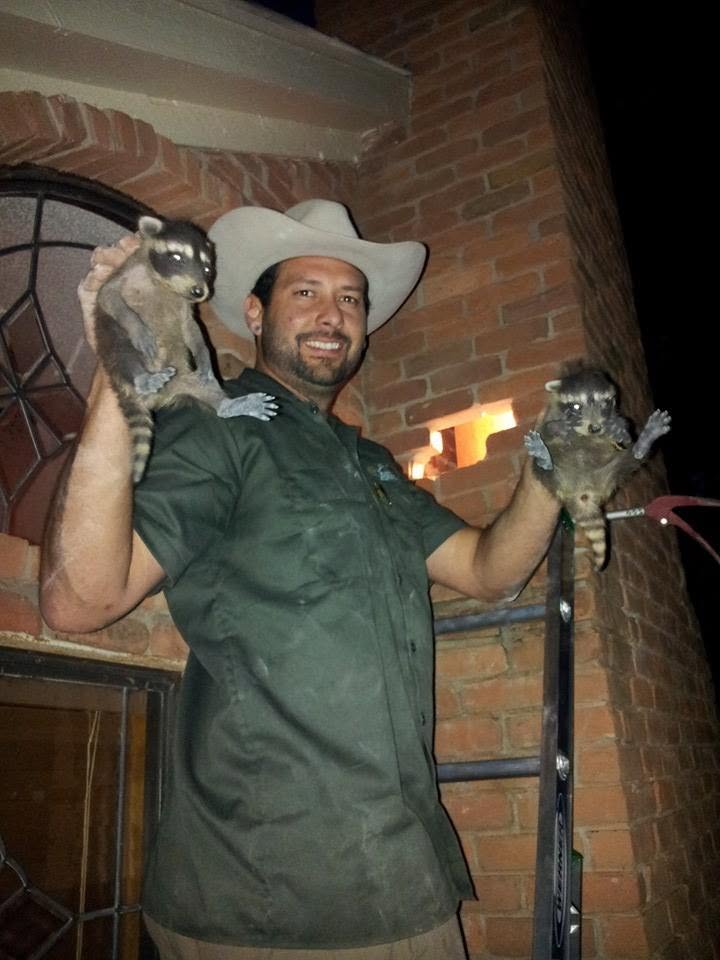
- Hand removal of kits: When there’s a litter, a technician locates the babies in the attic, removes them by hand and places them in a warmed reunion box outside. The mother then retrieves them and moves them to a new den.
- Live trapping: Used in some situations by licensed professionals. Trapping and relocating raccoons is regulated in many states, and relocation often isn’t legal or humane — a licensed pro knows the local rules.
What About DIY Deterrents?
Some mild harassment can encourage a mother raccoon to move her family on her own — for example, leaving an attic light on, playing a talk radio near the den, or placing an ammonia-soaked rag nearby. These methods sometimes help, but they’re unreliable, and they don’t solve the real problem: the open entry hole. Ultrasonic devices and mothballs are not effective long-term solutions, and mothballs are a health hazard in living spaces.
Get a Professional Raccoon Inspection
Step 5: Seal and Repair the Entry Points
Once every raccoon is confirmed out, entry points must be sealed with materials raccoons can’t tear through — heavy-gauge steel mesh, metal vent guards and chimney caps, not just wood or foam. Many professionals also raccoon-proof other vulnerable spots on the roof so the animals don’t simply rip a new hole a few feet away.
Step 6: Clean and Restore the Attic
Raccoons almost always establish a latrine in the attic. Their droppings can carry raccoon roundworm, a parasite whose eggs can survive for years and can be dangerous to people and pets. Cleanup usually includes removing droppings and contaminated insulation, sanitizing and deodorizing the area, and replacing insulation where needed. This is not a job to do without proper protective equipment.
Mistakes to Avoid
- Sealing the hole while raccoons are inside. Trapped raccoons will tear through ceilings, walls or new sections of roof — or die in the attic.
- Using poison. It’s inhumane, illegal for raccoons in many places, and leaves you with a dead animal in your attic.
- Trapping and relocating on your own. It may be illegal where you live, it’s risky, and it doesn’t fix the entry point.
- Cornering or handling a raccoon. Raccoons can bite and scratch, especially mothers protecting kits, and they’re a rabies vector species.
- Waiting it out. The longer raccoons stay, the more damage and contamination you’ll have to repair.
Why Most Homeowners Call a Professional
A licensed wildlife removal expert handles the whole process — inspection, humane removal, baby recovery, exclusion, roof repair and attic cleanup — and knows the wildlife laws in your state. Many offer guarantees on their exclusion work, so if a raccoon gets back in, they come back.
AtticNoise.com connects homeowners with experienced raccoon removal professionals across the country. Dealing with something else? See our pages on squirrel removal, opossum removal, rat and mouse removal and bat removal.
Find a Raccoon Removal Expert Near You
Frequently Asked Questions About Raccoons in the Attic
What is the best way to get a raccoon out of the attic?
The most reliable method is professional exclusion: confirm whether babies are present, remove the raccoons humanely (often with a one-way exclusion door or by reuniting kits with the mother outside), then seal and repair every entry point so they can’t return. Trapping alone rarely solves the problem if the entry hole is left open.
Will a raccoon leave the attic on its own?
Sometimes, but rarely for good. A mother raccoon with babies will stay until the kits are old enough to travel, usually around 8–10 weeks. Even if a raccoon leaves, the open entry hole and the scent it leaves behind invite it — or another raccoon — back.
What smell will drive raccoons out of an attic?
Strong odors such as an ammonia-soaked rag can make an attic less comfortable and encourage a mother to move her kits, but smells alone rarely work long term. Commercial “eviction fluid” made from male raccoon scent is used by professionals for the same reason. Never use mothballs — they are a health hazard indoors and are not labeled for this use.
Can I trap a raccoon in my attic myself?
In many states trapping and relocating raccoons requires a license or permit, and relocated raccoons often don’t survive. Raccoons are also a rabies vector species and can be aggressive when cornered or protecting young. For safety and legal reasons, trapping is best left to a licensed wildlife professional.
How do I know if there are baby raccoons in my attic?
Listen for chattering, chirping, whimpering or crying sounds, especially between March and July. If an adult raccoon keeps returning to the same spot in the attic, it is likely a mother with a litter. Never seal the entry hole until you are sure all kits are out.
Are raccoons in the attic dangerous?
Yes. Raccoon droppings can carry raccoon roundworm, a parasite that can be dangerous to people and pets. Raccoons can also carry rabies, and they tear up insulation, ductwork, wiring and roof structures.
How much does raccoon removal cost?
The price depends on how many raccoons there are, whether babies are present, how many entry points need repair and how much cleanup the attic needs. A professional inspection will give you an exact quote.